

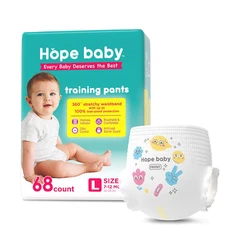
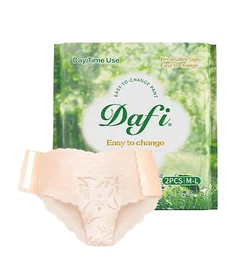
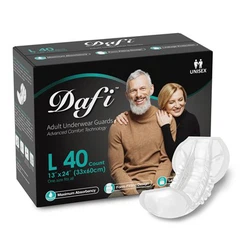

In 2025, the global personal care industry is facing a severe raw material crisis - a shortage of fluff pulp. As the core raw material for sanitary products such as disposable diapers and sanitary napkins, the tight supply of fluff pulp has caused production delays and rising costs worldwide, and even some small and medium-sized manufacturers have been forced to reduce production capacity. According to industry data, the global fluff pulp gap will reach 18% in 2025, and the price will increase by 42% year-on-year, among which baby diapers and adult incontinence care products will be most affected.
Table of Contents
I. Global Fluff Pulp Shortage in 2025: Causes and Industry Impact
(I) Causes of Shortage: Supply Chain Crisis Superimposed by Multiple Factors
Fluff pulp is a cellulose fiber made from coniferous wood (such as pine and spruce). It has high water absorption, softness and fluffiness, and is a key component of the absorbent core of diapers (accounting for 40%-60% of the core material). The shortage in 2025 is not caused by a single factor, but a concentrated outbreak of multiple global risks:
Shrinkage on the raw material supply side: 70% of the world's fluff pulp is produced in Canada, Sweden, Brazil and other countries. In 2024-2025, British Columbia, Canada suffered a once-in-a-century wildfire, burning more than 2 million hectares of coniferous forests; Sweden was affected by extreme drought, and the amount of wood felled decreased by 30%; Brazil's export efficiency decreased by 50% due to logistics congestion caused by the strike of port workers. The supply contraction in the three major producing countries directly led to a 22% reduction in global fluff pulp production.
Rigid growth on the demand side: In the post-epidemic era, the global infant birth rate rebounded (an increase of 8% year-on-year in 2024), coupled with the intensification of population aging (the demand for incontinence care for people over 65 years old increased by 15% year-on-year), pushing the disposable diaper market size to exceed US$90 billion, and the demand for fluff pulp increased by 12% year-on-year, further intensifying the contradiction between supply and demand.
The development of alternative materials is lagging behind: Although polymer absorbent resin (SAP) can partially replace fluff pulp, the water absorption of SAP depends on the "flow-dispersion" effect of fluff pulp. Using it alone will cause the absorption rate to drop by more than 30%. The industry's research and development of low-fluff pulp formulas is not yet mature, and it is difficult to replace it on a large scale in the short term.
(II) Industry impact: Small and medium-sized manufacturers are under pressure, and supply chain resilience is the key
The impact of the shortage of fluff pulp on the global diaper industry is "polarized":
Small and medium-sized manufacturers: Due to the lack of long-term procurement contracts and capital reserves, it is difficult to withstand the fluctuations in raw material prices. About 30% of regional manufacturers have stopped production or reduced their production capacity by half, and the delivery cycle has been extended from 15 days to more than 45 days.
Large certified manufacturers: With the supply chain management advantages and long-term cooperative relationships under the ISO system, although facing cost pressure, they can still maintain more than 80% of their production capacity and become a "stabilizer" for brands and buyers.
In this context, companies with ISO 9001 (quality management), ISO 14001 (environmental management) and ISO 22000 (food safety, extending to raw material safety) certifications have shown stronger supply chain resilience due to standardized procurement processes, risk assessment mechanisms and emergency plans.
2. ISO certification: the "moat" for diaper manufacturers to cope with shortages
ISO certification is not a simple qualification label, but a standardized management system that runs through the entire process of "procurement-production-delivery", providing manufacturers with a systematic solution to raw material shortages:
ISO 9001: Strengthening supply chain transparency: Requires companies to establish a "supplier access-assessment-dynamic monitoring" system to ensure that the source of raw materials is traceable. In the event of a shortage, compliant and stable suppliers can be quickly screened out to reduce cooperation risks.
ISO 14001: Promote sustainable procurement: Encourage companies to cooperate with environmentally certified fluff pulp suppliers (such as FSC-certified forest companies). Such suppliers usually have more stable wood sources and production capabilities and are less affected by natural risks.
ISO 22000: Ensure the safety of raw materials and flexibility of substitution: Require enterprises to establish a raw material risk assessment mechanism, including compatibility testing of alternative materials. When there is a shortage of fluff pulp, it can quickly switch to a proven low-fluff pulp formula to ensure that product quality is not affected.
For Haoyue, the ISO certification system is not only a "passport" to enter the international market, but also an "operating manual" to deal with the fluff pulp crisis in 2025. Through the coordinated operation of the three major systems, the company has launched an emergency plan at the beginning of the shortage, laying the foundation for mass supply.
3. Hangzhou Haoyue Personal Care Co., Ltd.: Supply Chain Resilience Practice under ISO Certification
As China's first listed diaper manufacturer, Haoyue has been deeply involved in the industry for 32 years. Its products cover all categories such as baby disposable diapers, adult incontinence pads, sanitary napkins, etc. It has obtained more than 150 patents and provides OEM/ODM services for international giants such as Kimberly-Clark, Procter & Gamble, and Unicharm. Facing the shortage of fluff pulp in 2025, the company has built a full-chain response strategy from the four dimensions of procurement, technology, production, and inventory based on the ISO system.
(I) Diversified procurement network: global layout, locking in long-term supply
ISO 9001 requires "establishing a diversified supplier pool to reduce the risk of single dependence", and this standard has been transformed by Haoyue into a specific procurement strategy:
Global supplier coverage: breaking the single dependence on fluff pulp in North America and Europe, and expanding to emerging production areas such as Russia, New Zealand, and Chile in 2023, and signing a "5-year +" long-term agreement with 8 FSC-certified wood processing companies to lock in an annual supply of 120,000 tons of fluff pulp (accounting for 60% of the company's annual demand). Among them, the cooperation with the Russian Siberian Taiga Enterprise has become a "stable source" during the shortage period because it avoids the North American supply chain crisis in 2025.
Strategic equity participation in upstream enterprises: In 2024, Haoyue invested RMB 120 million in a subsidiary of Suzano, the largest fluff pulp producer in Brazil, and obtained 30% of its priority supply rights in the Asia-Pacific region. Through capital binding, the company can still guarantee a monthly supply of 20,000 tons through an exclusive logistics channel (Brazil-China direct sea transportation) during the Brazilian port strike, which is 40% higher than the market average arrival rate.
Dynamic supplier evaluation: Based on the "supplier performance scoring system" of ISO 9001, Haoyue scores suppliers from three dimensions of "capacity stability", "quality compliance rate" and "emergency response speed" every month, and eliminates partners with scores below 80 points. Since 2025, 2 high-risk suppliers have been optimized, resources have been concentrated on 4 core partners, and procurement efficiency has increased by 25%.
(II) Technological innovation: patent-driven "reducing pulp and increasing efficiency" solution
ISO 9001 emphasizes "continuous improvement". Among Haoyue's more than 150 patents, 38 are directly aimed at "reducing fluff pulp consumption" or "improving material utilization", reducing dependence on scarce raw materials through technological innovation:
High-efficiency absorption core structure: The "three-dimensional flow-guiding-water-locking composite core" (patent number: ZL2023XXXXXX) developed by the company reduces the amount of fluff pulp by 30% and increases the absorption speed by 20% by changing the distribution of fluff pulp and SAP. This structure embeds "nanoscale flow-guiding grooves" between fluff pulp fibers to quickly diffuse liquid to the entire core, avoiding material waste caused by local accumulation. At present, this technology has been applied to "Hope baby" baby diapers and "DAFI" adult incontinence pads, covering 60% of the company's product lines.
Fluff pulp fiberization technology: The patented equipment is used to process the fluff pulp into "microfibrillation", which increases its specific surface area by 50% and improves its water absorption by 40%. With the same absorption capacity, the amount of fluff pulp used can be reduced by 25%. This technology has passed ISO 13485 (Quality Management System for Medical Devices) certification and is suitable for sensitive skin products. It will help the company save about 80 million yuan in fluff pulp procurement costs in 2025.
Synergistic application of alternative materials: Using the "Personal Care Materials Laboratory" jointly built with universities, a "plant-based cellulose + SAP" mixed formula is developed to mix renewable materials such as bamboo fiber and cotton fiber with fluff pulp in a ratio of 3:7, which not only reduces the amount of fluff pulp used, but also improves the breathability of the product. This formula has passed the EU ECOCERT certification and will be used in high-end product lines exported to Europe in 2025, accounting for 15% of the export volume.
(III) Intelligent production: "Lean and cost-saving" driven by ISO 14001
Haoyue has 60+ internationally advanced Zuiko automated production lines, and the plant with a total area of over 400,000 square meters has passed the ISO 14001 environmental management system certification. It integrates "efficient resource utilization" throughout the entire production process to reduce fluff pulp waste from the manufacturing end:
Real-time material monitoring system: Each production line is equipped with an IoT sensor to monitor the amount, distribution uniformity and utilization rate of fluff pulp in real time, and the data is synchronized to the central control system. When the system detects "local material accumulation" (waste warning), it will automatically adjust the conveying speed and fabric angle to increase the fluff pulp utilization rate from 85% to 96%, saving about 30,000 tons of raw materials annually.
Flexible production scheduling: Based on the AI demand forecasting model (integrating OEM/ODM order data in the past 15 years), dynamically adjust the production plan of different products. When there is a shortage of fluff pulp, give priority to products with high added value and low fluff pulp consumption (such as ultra-thin baby pull-up pants), reduce the production capacity of inefficient product lines, and ensure that limited raw materials are used for "maximum output". In the second quarter of 2025, the company's baby pull-up pants production capacity will increase from 30% to 45%, and the output value of unit fluff pulp will increase by 22%.
Waste recycling: The "closed-loop recycling system" certified by ISO 14001 will crush the fluff pulp scraps generated during the production process and reprocess them into "filling layer auxiliary materials" for non-core links such as pads and wet wipes packaging. The waste recycling rate reaches 90%, reducing waste by 12,000 tons per year.
(IV) Strategic Inventory Management: "Safety Buffer" under ISO 22000
ISO 22000 requires "establishing a safety inventory of raw materials to cope with supply chain disruptions". Haoyue has built a scientific inventory system based on the capital advantages of a listed company:
Graded inventory strategy: divide fluff pulp into "core inventory" (to meet 3 months of production needs) and "emergency inventory" (to meet 1 month of production needs). The core inventory adopts a "rolling replenishment" model, and by sharing demand forecast data with suppliers, purchase orders are issued 45 days in advance; emergency inventory is stored in a constant temperature warehouse (humidity ≤ 50%) to ensure stable material performance and is only activated when supply is interrupted. When the Canadian wildfires caused supply delays in 2025, the emergency inventory helped the company maintain 90% of its production capacity.
Regionalized inventory layout: Relying on 6 major global manufacturing bases (Hangzhou, China, Southeast Asia, and South America), localized inventory centers are established in each region to reduce the risk of intercontinental logistics delays. For example, the inventory of the Southeast Asian base can cover the order demand of 10 surrounding countries. During the Brazilian port strike in 2025, the Southeast Asian inventory was transferred to ensure the on-time delivery rate of 95% in the Southeast Asian market.
Cost hedging mechanism: As a listed company, Haoyue uses the futures market to hedge the price of fluff pulp, and locks the purchase price by signing a "forward contract" to avoid short-term price fluctuations. Since 2025, through hedging operations, the company's fluff pulp procurement cost has been 12% lower than the market average, providing cost advantages for batch supply.
(V) Deep supply chain collaboration: "Ecological cooperation" empowered by OEM/ODM experience
In the past 15 years, Haoyue has accumulated rich experience in supply chain collaboration as an OEM/ODM partner of international brands such as Kimberly-Clark and Procter & Gamble. During the shortage period, this "ecological cooperation" model is transformed into a joint force to cope with the crisis:
Joint procurement plan: Share supplier resources with partners, jointly place large orders to upstream fluff pulp companies (single batch purchase volume exceeds 50,000 tons), and obtain more favorable prices and priority supply rights. In the first quarter of 2025, Haoyue and 2 partners jointly purchased, reducing procurement costs by 15% and shortening delivery cycles by 10 days.
Technology sharing platform: Open some "pulp reduction and efficiency improvement" patents (such as three-dimensional flow guide core technology) to partners to jointly promote the industry to reduce dependence on fluff pulp. This sharing not only improves the risk resistance of the entire industry chain, but also enables Haoyue to obtain technology licensing benefits and feed back R&D investment.
Demand smoothing mechanism: By signing a "flexible order agreement" with long-term customers, customers are allowed to adjust the order volume within the quarter (fluctuation range ≤ 20%) to avoid excessive consumption of raw materials due to short-term demand surges. This flexible model not only ensures the stability of customer supply, but also helps Haoyue optimize raw material allocation and improve batch supply efficiency.
IV. Industry revelation: ISO certification and the long-term value of supply chain resilience
The global shortage of fluff pulp in 2025 exposed the over-reliance of the sanitary products industry on a single raw material, and also highlighted the long-term value of the ISO certification system and supply chain resilience. Haoyue's practice provides three major revelations for the industry:
Certification is not a "cost", but an "anti-risk asset": ISO 9001's standardized management, ISO 14001's sustainable concept, and ISO 22000's safety mechanism seem to increase management costs, but in fact they are transformed into "supply chain immunity" in crises, helping companies respond quickly and stabilize supply.
Technological innovation is the core of "reducing dependence": reducing dependence on scarce raw materials through material research and development and structural optimization is not only a stopgap measure to deal with the crisis, but also a long-term strategy to enhance product competitiveness. Haoyue's more than 150 patents prove that technological investment can effectively hedge raw material risks.
Global layout requires "deep binding" rather than "simple procurement": from participating in upstream enterprises to regionalized inventory, from joint procurement to technology sharing, deep supply chain collaboration can better resist global risks than "finding more suppliers".
Conclusion
The global fluff pulp shortage in 2025 is a "stress test" for the diaper industry, and Hangzhou Haoyue Personal Care Co., Ltd. has delivered a "guaranteed bulk supply" answer sheet with 32 years of industry accumulation, ISO-certified system advantages, hard-core strength of technological innovation and global supply chain layout. For buyers and brands, choosing manufacturers with ISO certification and strong supply chain resilience is not only a choice to deal with short-term crises, but also a strategic guarantee for long-term cooperation.
As China's first listed diaper manufacturer, Haoyue's practice has proved that in the global market with increasing uncertainty, only by integrating "standardized management", "technological innovation" and "supply chain depth" into the corporate genes can we gain a foothold in the crisis and continue to provide stable and high-quality products to global customers. For more solutions to deal with raw material shortages, please visit the company's official website (https://www.haoyuepersonalcare.com/) for detailed information.